

Residency Experience
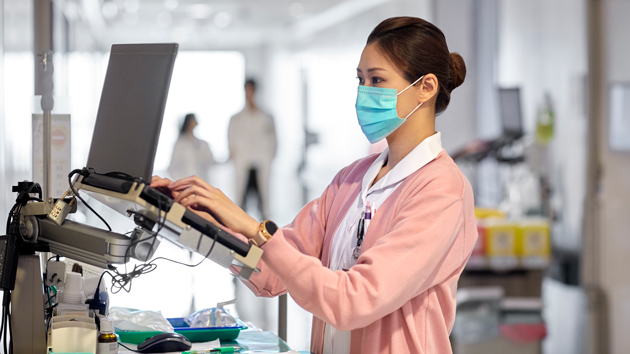
The Hillsboro Medical Center Nurse Residency Program builds on fundamental nursing education to address complex patient care needs within diverse patient populations.
Our specialty training nurse residency program is intended for:
- Nurses with under a year of nursing experience, who have a passion and drive to develop as a nurse by continuing their education in a specialty area of practice, and/or
- Experienced nurses with more than 12 months experience, seeking to transition and start a career in a new nursing specialty practice care area.
Our residency program fosters the development of one’s nursing career by offering opportunities for professional growth.
Nursing Areas
Resident nurses in the Acute Care Unit will gain experience in:
- Developing critical thinking skills to assess complex situations, analyze patient data, identify patterns and make quick decisions. Nurses use their expertise to anticipate potential complications, prioritize care and adapt their strategies to provide the best possible outcomes for their patients.
- Conducting thorough patient assessments, identifying changes in patients’ conditions and intervening promptly to ensure their safety.
- Assisting patients in their recovery after surgeries, ensuring proper wound care, infection prevention, pain management and monitoring for complications.
- Safely administering and managing medications, educating patients about their medications and monitoring for any adverse reactions.
- Regularly monitoring patients’ vital signs such as blood pressure, heart rate, respiratory rate and temperature, and respond promptly to any abnormalities.
- Performing continuous telemetry monitoring of patients’ heart rhythm, initiation nursing intervention and working with the interdisciplinary team to escalate patient conditions for rapid care.
- Educating patients and their families about medical conditions, treatments, medications and post-discharge care plans.
- Collaborating with physicians, surgeons, therapists and other healthcare professionals to provide comprehensive care to patients, ensuring a holistic approach to their well-being.
Resident nurses in the Cardiac Cath Lab will gain experience in:
- Delivering quality nursing care for cardiovascular patients undergoing a wide variety of angiographic procedures.
- Maintaining and handling sterile equipment under surgical conditions.
- Monitoring a patient during a wide variety of invasive angiographic procedures, including heart catheterizations, digital vascular imaging, coronary angioplasty, peripheral and renal angioplasties, pacemakers and neurovascular arteriograms.
- Operating, controlling quality and routinely maintaining physiologic monitoring system, pressure transducers, co-oximeter, thermodilution, defibrillator, IABP and emergency equipment.
- Performing calculations and measurements using data obtained from heart catheterizations. This includes cardiac outputs, pressure measurements, and resistance and valve areas.
- Learning and performing scrub roll to assist physician during intra-vascular and pacemaker procedures
- Utilizing intravascular ultrasound under the direction of the physician.
- Assisting with intra-aortic balloon pump insertion and monitoring.
- Assisting with temporary pacemaker insertion, setup, and monitoring.
- Maintaining, archiving, retrieving and locating present and prior studies done in the Cardiac Cath Lab.
- Administering medications as ordered by physician, including those that may lead to moderate sedation following moderate sedation policy and monitoring procedures.
Resident nurses in the Emergency Department will gain experience in:
- Assessing patient needs
- Planning and coordinating patient interventions and consultations.
- Procedures and treatments including, but not limited to, moderate and deep sedation, ultrasonography, intubation, cardioversion, sexual assault exams, cardiopulmonary resuscitation and imminent deliveries.
- Patient population and diagnosis including acute stroke, acute ST-elevation myocardial infarction (STEMI), acute psychosis/psychological emergencies and sepsis. Note that patients frequently present with alcohol or drug abuse history, or complex medical histories.
- Providing continuing care and monitoring of emergency department patients in locations outside of emergency department, including Magnetic Resonance Imaging (MRI), Commuted Tomography (CT) Scan, Nuclear Medicine, Ultrasound and Radiology.
Resident nurses in the Intensive Care Unit will gain experience in:
- Procedures and treatments including, but not limited to, moderate and deep sedation, intubation, cardiopulmonary resuscitation and cardioversion.
- Patient population and diagnosis, including acute stroke, acute ST-elevation myocardial infarction (STEMI), acute psychosis/psychological emergencies, acute respiratory distress syndrome (ARDS), COVID-19 and sepsis. Note that patients frequently present with alcohol or drug abuse history, or complex medical histories.
- Caring for patients on ventilatory support, assisting with intubation and extubation.
- Collaborating with the interdisciplinary team using effective communication and conflict management skills.
- Adapting care to accommodate unexpected changes in patient status.
- Communicating patient needs and changes in condition to physician, team members and/or family.
- Identifying and responding to emergency situations.
- Analyzing and interpreting patient diagnostic values and procedural results, and implementing interventions appropriately based on those results with consideration of patient baseline and reportable findings.
- Providing continuing care and monitoring of ICU/PCU (Progressive Care Unit) patients in locations outside of ICU/PCU, including Magnetic Resonance Imaging (MRI), Commuted Tomography (CT) Scan, Nuclear Medicine, Ultrasound and Radiology.
Resident nurses in the Labor, Delivery, Recovery and Postpartum Unit will gain experience in:
- Providing holistic family-centered care to mothers from antepartum, intrapartum and delivery through postpartum and newborn care.
- Performing well and late-preterm newborn assessments and care.
- Breastfeeding support in alignment with Baby Friendly Initiative.
- Assisting and managing patients in active labor as part of the interdisciplinary team. Nursing roles include, but are not limited to, fetal monitoring, induction assistance, medication administration, pain management, labor support and education.
- Assessing and supporting psychosocial needs of the family.
- Collaborating with leadership team, physicians or midwife, lactation nurse and Newborn Intensive Care Unit (NICU) nurse.
- Circulating cesarean sections and other obstetric surgical procedures.
- Recovering patients after childbirth, including unmedicated, IV analgesia, nitrous oxide and regional anesthesia.
- Caring for birthing people, ranging from routine care to managing multiple co-morbidities.
- Providing bereavement support to families in crisis.
- Triaging patients for signs of preterm labor, active labor, pregnancy complications and other medical related concerns.
- Maintaining organization electronic medical record documentation requirements.
Resident nurses in the Neonatal Intensive Care Unit will gain experience in:
- Providing holistic family-centered care for babies born at 32 weeks or later and at 1,500 grams.
- Providing family support, education and psychosocial support using Dorthea Orem’s Self-Care Deficit model.
- Offering breastfeeding support in alignment with Baby Friendly Initiative.
- Responding and assisting with neonatal cardiopulmonary distress within Neonatal Resuscitation Program guidelines and neonatologist expertise.
- Maintaining organization electronic medical record documentation requirements.
- Caring for neonates with conditions including, but not limited to:
- CPAP-assisted respiratory support
- Hypoglycemia
- IV antibiotics
- Feeder-growers
- Neonatal Opioid Withdrawal Syndrome (NOWS)
- Hyperbilirubinemia
- Developmental needs of prematurity
- Full-term well newborns
- Newborn readmission up to one-year
Please note that this training program is customized to Level II Neonatal Care. This program is not intended for candidates seeking levels III and IV Neonatal Care.
Resident nurses in the Perioperative Surgical Department will gain experience in:
- Providing comprehensive surgical care to patients, in partnership with other members of the perioperative team, throughout the lifespan on both a routine and emergent basis.
- Assessing patient risks and needs in the perioperative environment to ensure the safest possible surgical experience.
Resident nurses in the Perioperative Surgical Department will develop:
- Competency in the roles of circulator nurse.
- Mechanical abilities.
- Strong observation and communication skills.
- Strong surgical conscious with the ability to identify and correct issues in real time.
- Ability to function calmly in a high stress environment, often under time pressure.
- Ability to change direction/plan rapidly.
- Ability to maintain focus and strong attention to detail.
- Ability to sit and stand for long periods of time.
- Physical stamina to be moving/walking for extended periods of the day and to reach high or low to the ground as needed, and understanding of cleaning practices in OR’s.
Upon completion of the specialty training program, resident nurses will have a thorough understanding of:
- The roles of circulator and scrub nurse.
- Aseptic and sterile techniques.
- Vigilant surveillance of a sterile field to prevent contamination.
- Proper positioning techniques to maximize surgical visualization while protecting patient from injury.
- Assessment and preparation for fire, physical and chemical burn risks.
- Pathophysiology and response to surgical emergencies such as malignant hyperthermia, hemorrhage or laryngospasm.
- Medical gasses and their uses.
Resident nurses in the Progressive Care Unit will gain experience in:
- Conducting thorough patient assessments, identifying changes in patients’ conditions, and intervening promptly to ensure their safety.
- Administering medications and understanding their indications, contraindications and side effects.
- Performing various treatments and procedures—such as wound care and IV therapy—and monitoring cardiac and respiratory function.
- Developing critical thinking skills to prioritize patients’ needs and make informed decisions quickly.
- Working collaboratively with physicians and other members of the healthcare team to manage patients’ care and ensure positive outcomes.
- Providing emotional support and education to patients and their families, including teaching them about their medical conditions and treatment options.
Overall, this comprehensive learning experience helps resident nurses develop the necessary skills and knowledge to excel in their nursing careers.